
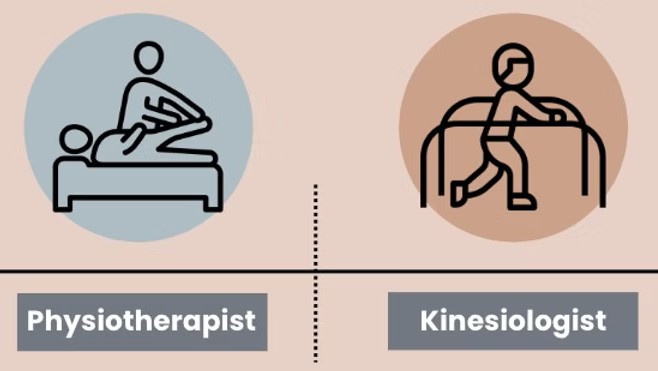
If you’ve ever been told to “see someone” about a nagging shoulder or a knee that won’t cooperate, you’ve probably run into both terms — kinesiologist and physiotherapist. They sound similar, they both deal with the body in motion, and their work often overlaps. But they’re not the same profession, and knowing the difference can help you pick the right practitioner for your situation.
What a Physiotherapist Does
A physiotherapist (also called a physical therapist in some countries) is a regulated healthcare professional trained to assess, diagnose, and treat injuries, illnesses, and physical impairments. Their toolkit includes manual therapy, targeted exercise, electrotherapy, and hands-on techniques designed to reduce pain, restore function, and speed up recovery after surgery, injury, or the onset of a chronic condition.
Physiotherapists typically hold a university degree — often a master’s or doctoral-level qualification, depending on the country — and must be licensed to practice. Because they work within the healthcare system, they’re often the first point of contact after an injury, surgery, or diagnosis like a stroke or a torn ligament.

What a Kinesiologist Does
A kinesiologist studies human movement and applies that knowledge to help people improve physical performance, prevent injury, and manage chronic conditions through exercise. Rather than diagnosing or treating injuries directly, kinesiologists design exercise and movement-based programs — think rehabilitation exercises, strength and conditioning plans, ergonomic assessments, or return-to-work programs after a physiotherapist has cleared the initial injury.
Kinesiologists usually hold a bachelor’s degree in kinesiology or exercise science. In some regions (Ontario, Canada, for example), kinesiology is a regulated health profession; in many others, it isn’t regulated at all, so credentials and scope of practice can vary more widely than with physiotherapy.

The Core Differences
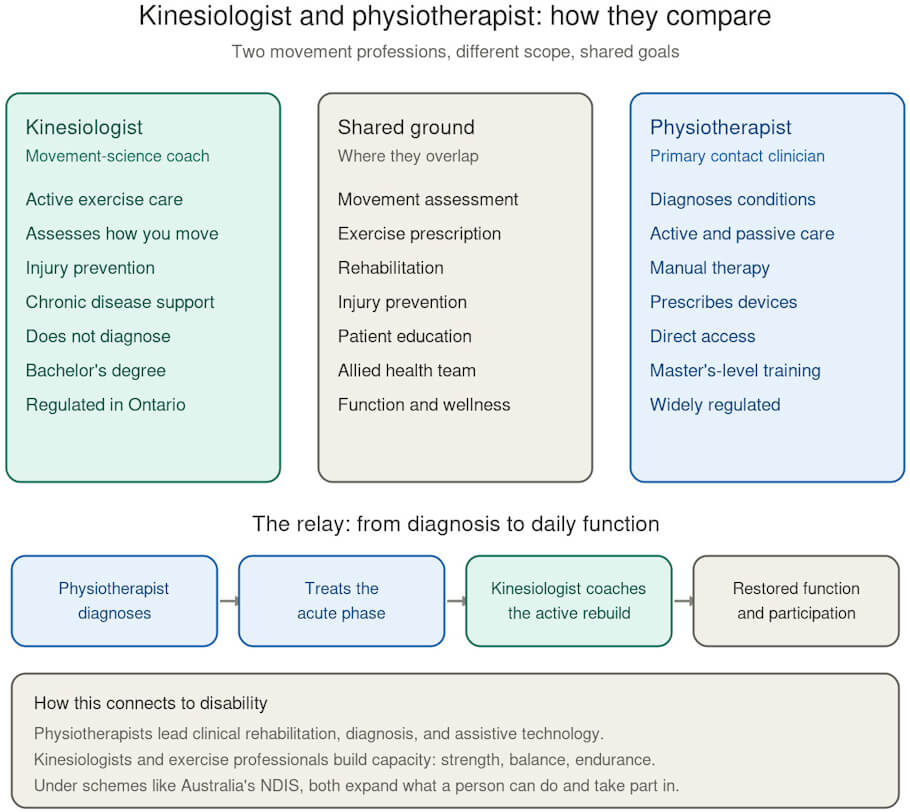
Scope of practice: Physiotherapists diagnose and treat injuries and medical conditions directly. Kinesiologists focus on movement, exercise prescription, and performance rather than clinical diagnosis.
Education and regulation: Physiotherapy is a licensed, regulated healthcare profession almost everywhere. Kinesiology’s regulatory status depends heavily on location.
When you’d see one over the other: You’d typically see a physiotherapist right after an injury or surgery, when hands-on treatment and clinical assessment are needed. A kinesiologist often steps in during the later stages of recovery, or for general fitness, injury prevention, and workplace ergonomics, using structured exercise to build strength and mobility over time.
Treatment style: Physiotherapy often includes manual therapy — joint mobilization, soft tissue work, taping — alongside exercise. Kinesiology is almost entirely exercise- and movement-based.
Do They Work Together?
Often, yes. In many rehabilitation settings, a physiotherapist handles the initial diagnosis and acute treatment, then hands off to a kinesiologist for the exercise-based conditioning phase that follows. The two professions complement each other rather than compete — one is rooted in clinical treatment, the other in movement science and performance.
Bottom Line
If you’re dealing with pain, an injury, or a condition that needs diagnosis and hands-on treatment, a physiotherapist is usually the right starting point. If you’re looking to build strength, improve movement patterns, or work through a structured exercise program — especially once the acute phase of an injury has passed — a kinesiologist can be a great fit. Many people benefit from both, just at different stages of their recovery or fitness journey.