
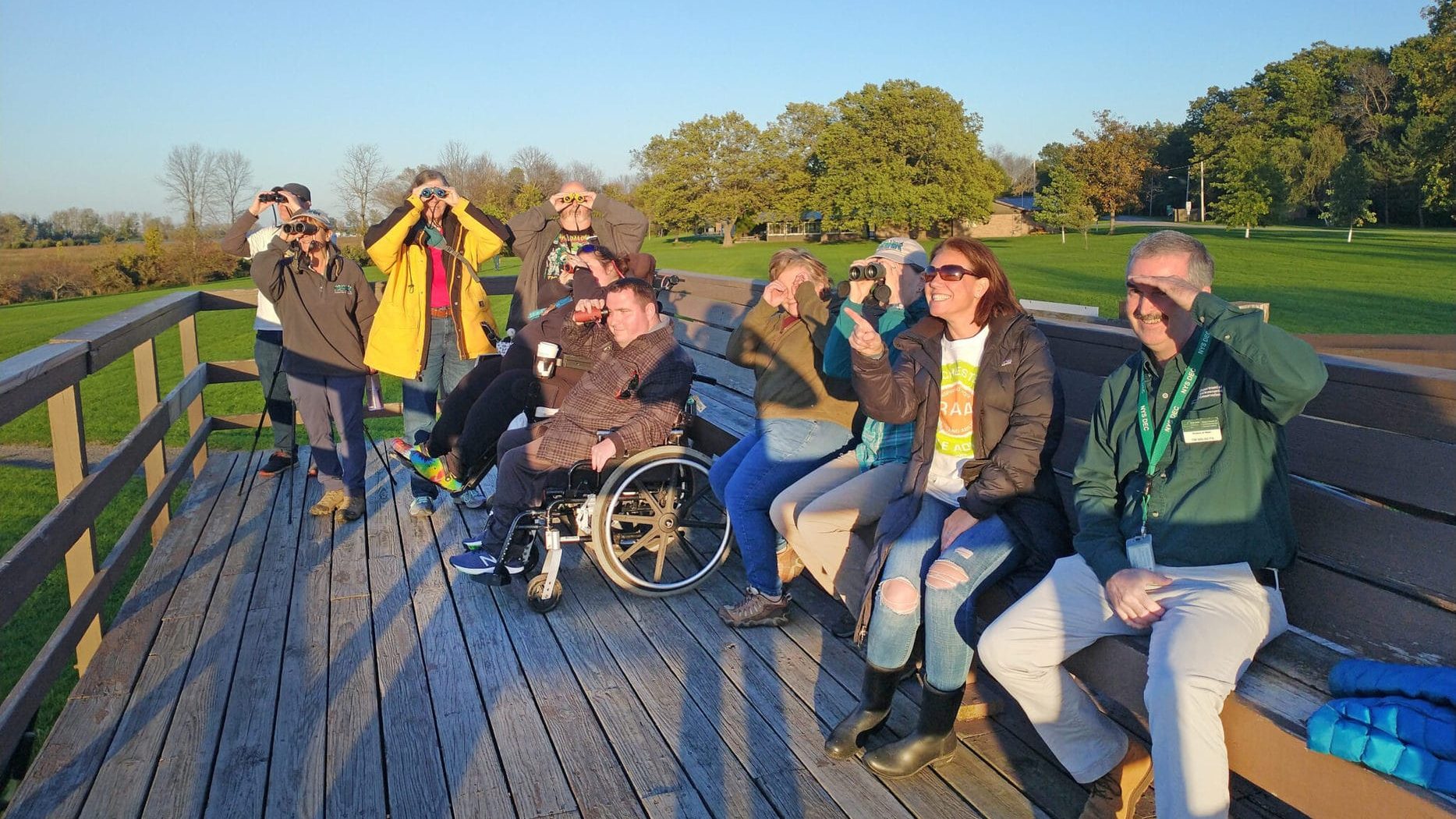
“Birds are accepting of everyone – they don’t mind your age, socioeconomic status, gender, physical ability, or appearance. It’s up to us to create welcoming spaces and shake off the stereotype of what defines a true birder. Once you go outside to listen or look for birds, you’re a birder!
Birdwatching or “birding” is one of the fastest growing hobbies in the United States. According to a 2022 report by the US Fish and Wildlife Service, an estimated 96 million people labeled themselves as birders – that’s almost 1 third of the U.S. population!” [1]
What is Accessible birdwatching?
Accessible birdwatching (or inclusive birdwatching) refers to birdwatching experiences designed so that people of all abilities—including those with physical, sensory, or cognitive disabilities—can participate fully and comfortably in the activity.
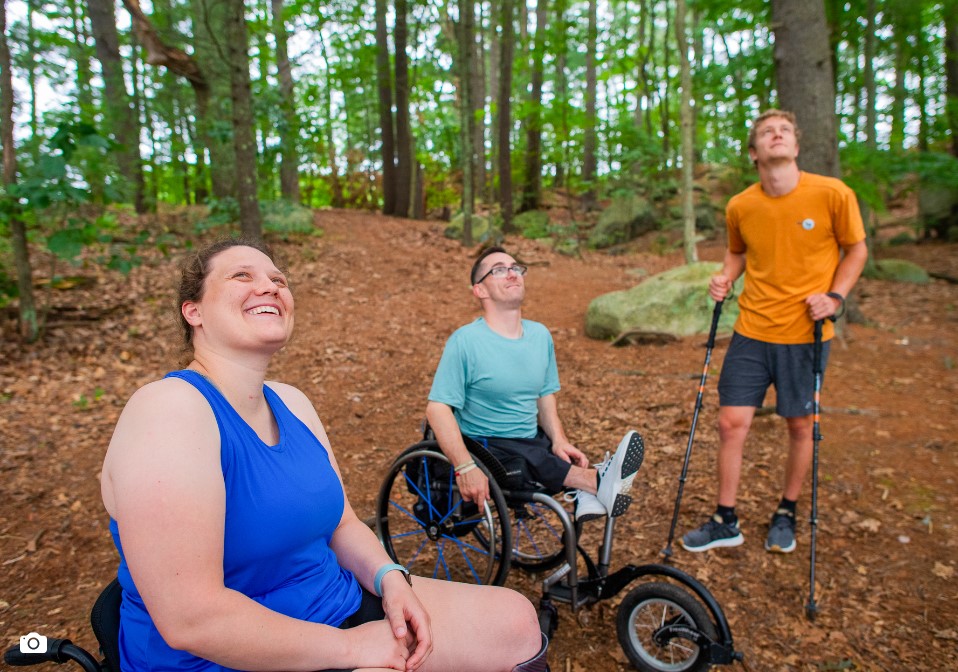
Here are some key features of accessible birdwatching offers:
1) Accessible Trails and Viewing Areas
- Smooth, wide paths for wheelchair or walker users.
- Ramps, boardwalks, and resting benches along the trail.
- Viewing platforms with railing gaps or lower scopes to accommodate seated users.
2) Adaptive Equipment
- Binoculars with image stabilizers for those with tremors.
- Audio bird guides or apps with voice descriptions for those who are blind or have low vision.
- Sign language interpreters or captioned birdwatching tours for deaf or hard-of-hearing participants.
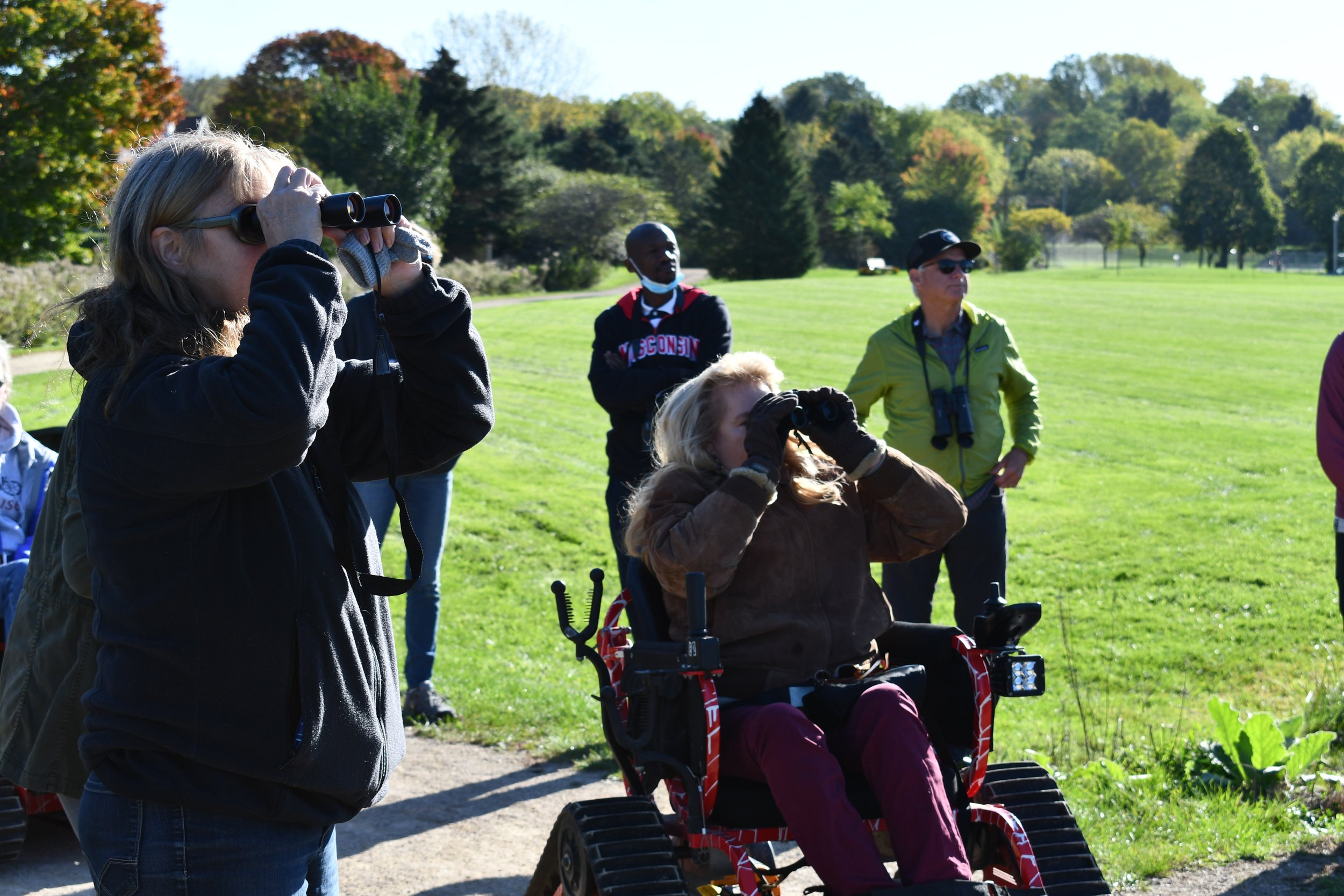
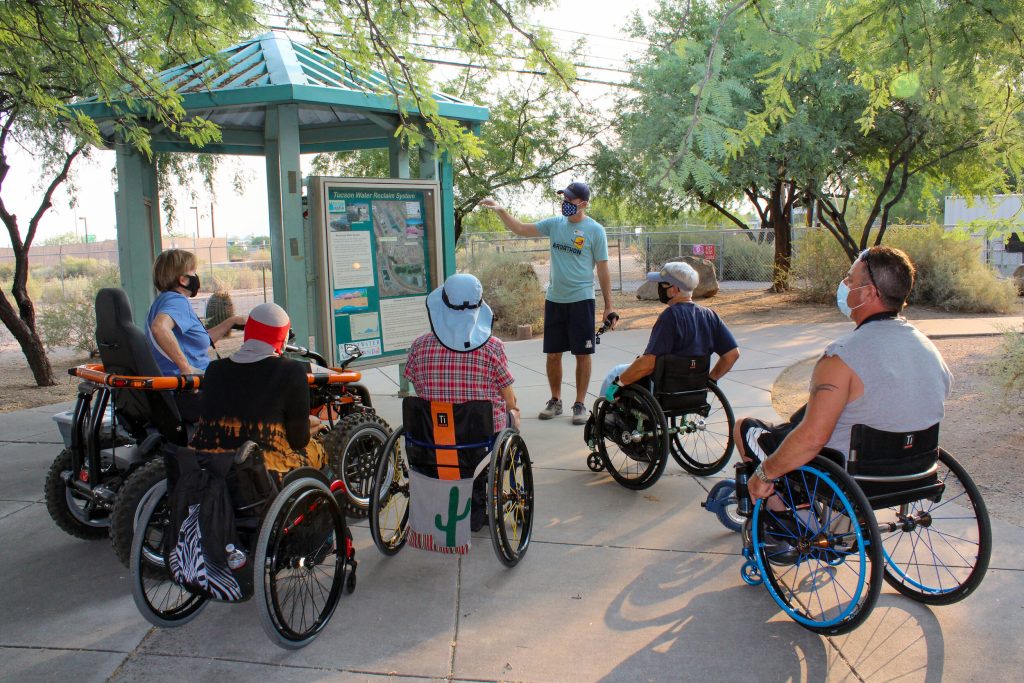
3) Inclusive Programs and Guides
- Trained guides who understand how to engage participants with various disabilities.
- Sensory-friendly walks with reduced group sizes or quiet spaces
- Materials in multiple formats (large print, Braille, plain language).
4) Transportation and Facilities
- Accessible parking and restrooms.
- Shuttle services with lifts or ramps at larger reserves or parks.
5) Virtual or Remote Options
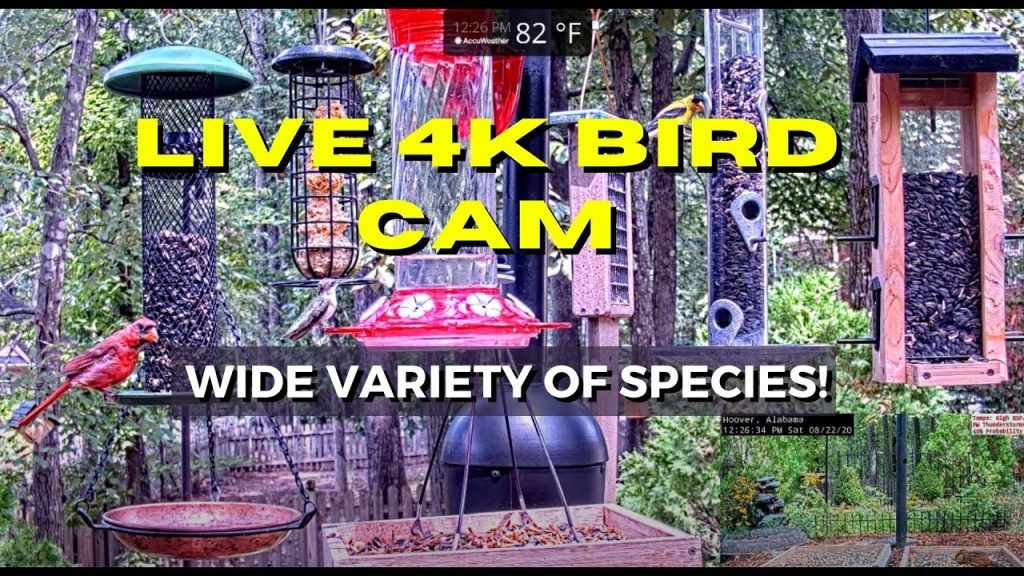
- Live-streamed bird cams or virtual birdwatching tours, allowing participation from home.
- Interactive birding apps that offer sound identification or photo recognition.
6) Why Accessible Birdwatching Matters
- It promotes well-being, mental health, and connection to nature for everyone.
- Encourages inclusivity in outdoor recreation.
- Opens up birdwatching as a hobby to a broader, more diverse community.
Resources
[1] https://tx.audubon.org/news/striving-more-accessible-birding
[2] https://chatgpt.com/c/687ab045-5924-8004-b127-1d1403966d84