
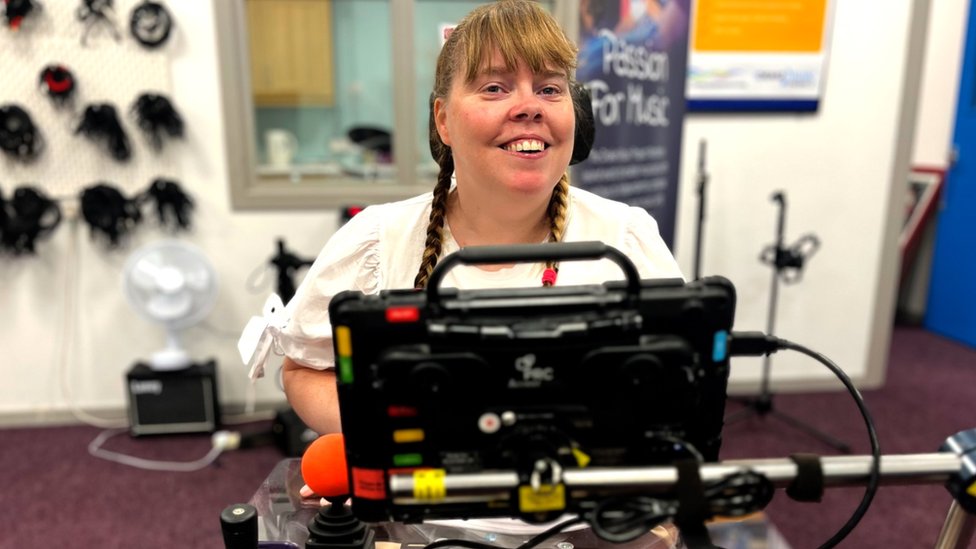
“The rise of artificial intelligence has been a revolutionary development. Today’s AI systems are capable of mimicking human intelligence and carrying out tasks that require human-like cognitive abilities.
The use of AI in music also refines music production in several ways. Whether simulating vocals, lyrics, or instrumental sequences, AI’s efficiency is outshining traditional music-making processes. Music producers and directors are leaning on synthetic media software to modulate and adjust their audio pitches, edit music, and compose albums without explicit tools.” [1]
“For individuals with disabilities, AI music generators can provide a means of musical expression that might otherwise be inaccessible. These tools can interpret alternative inputs, such as eye movements or brain waves, allowing those with physical limitations to compose music through alternative methods of interaction.” [2]
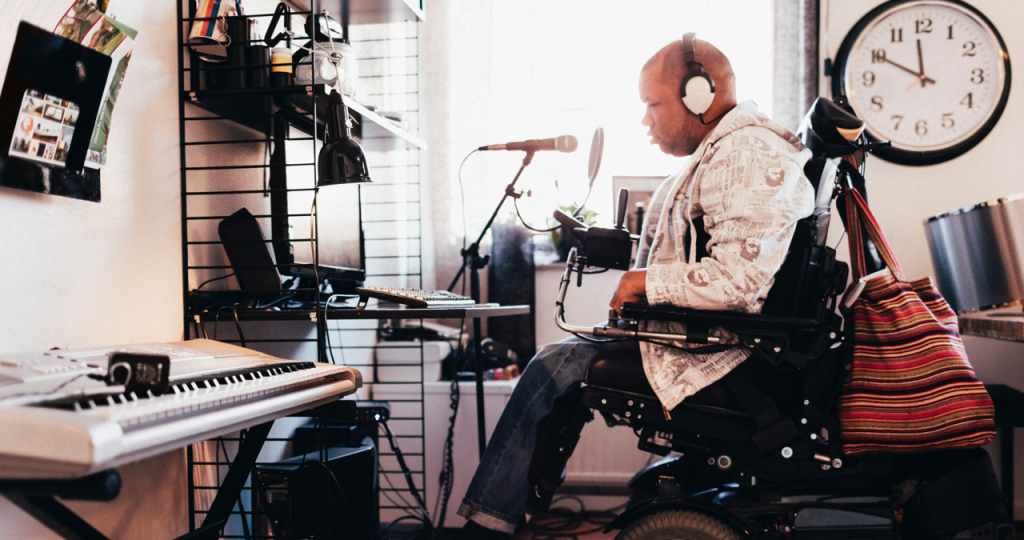
The benefits of AI Music for Musicians with disabilities
“AI music technology offers several significant benefits for musicians with disabilities, helping to remove physical, cognitive, and technical barriers to musical expression and creation. Here are some key advantages:
1. Accessibility to Music Creation
- Hands-Free Composition: AI tools allow users to compose music using voice commands, brain-computer interfaces (BCIs), or eye-tracking, enabling musicians with limited or no motor control to create music.
- Assistive Interfaces: Simplified, customizable digital audio workstations (DAWs) powered by AI can cater to individuals with visual, auditory, or mobility impairments.
2. Enhanced Creativity and Support
- Idea Generation: AI can help generate melodies, harmonies, and rhythms, supporting musicians who may struggle with traditional music theory or writing processes.
- Real-Time Feedback: AI tools can analyze compositions and provide suggestions for improvement, aiding musicians with learning disabilities or cognitive impairments.
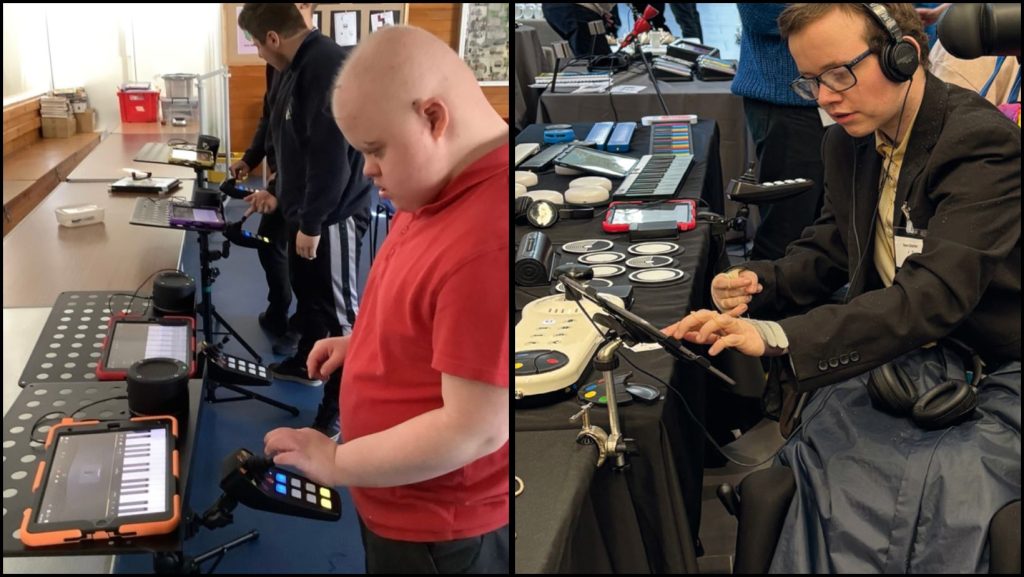
3. Performance Enhancement
- AI Accompaniment: Musicians with limited range or ability can perform with AI-generated backing tracks tailored to their timing and style.
- Adaptive Instruments: AI can power instruments that adapt to the user’s input method (e.g., gesture-based instruments), offering more inclusive performance opportunities.
4. Music Education
- Personalized Learning: AI tutors can adjust the pace and style of instruction to suit individual needs, making music education more accessible to learners with disabilities.
- Speech-to-Text & Text-to-Speech: These features assist those with hearing or speech impairments in understanding and interacting with educational materials.
5. Increased Independence
- Reduced Need for Physical Assistance: AI tools allow musicians to independently produce, edit, and distribute their music without needing technical help.
- Remote Collaboration: AI facilitates remote music-making and real-time collaboration, which is especially beneficial for those with mobility or transportation challenges.
6. Inclusion and Representation
- Voice Cloning and Synthesis: Musicians who cannot sing or speak can still create vocal music using synthetic voices that reflect their identity or artistic intent.
- Customized Instruments and Tools: AI allows for the design of personalized digital instruments that accommodate unique physical abilities.” [3]
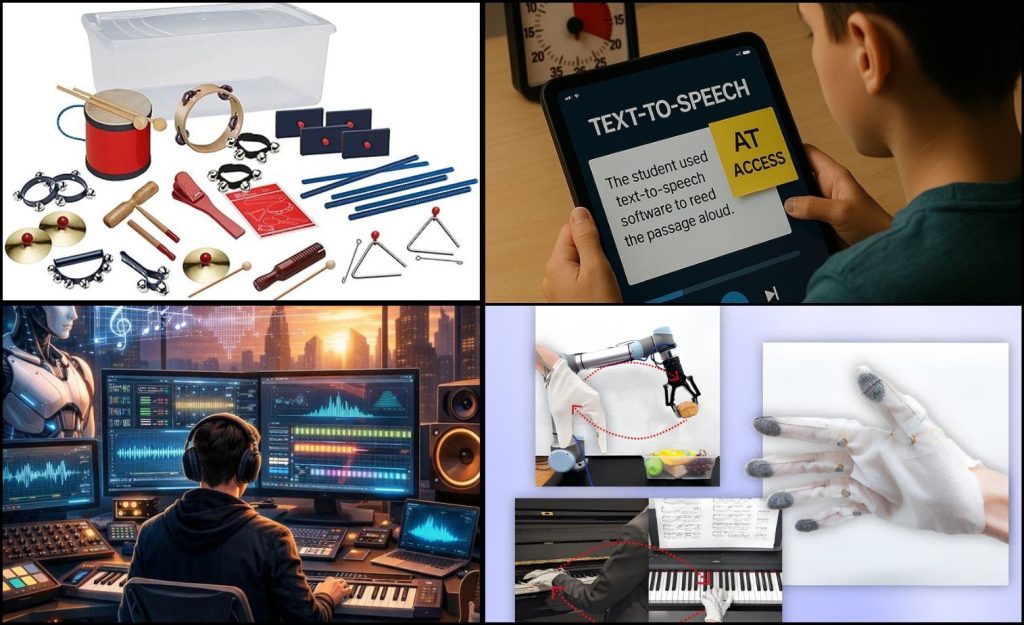
https://www.ism.org/advice/disability-and-music
“AI is making it easier than ever for anyone, regardless of background, skill level, or ability, to create music. By removing traditional barriers and offering new creative tools, AI is ushering in an era where musical expression is a right, not a privilege. The future of music is open, inclusive, and filled with possibilities.” [4]
Resources
[1] https://www.sganalytics.com/blog/ai-generated-music-creating-new-opportunities-for-artists/
[2] https://imaginestudios.ai/the-harmonious-future-of-ai-music-generators/
[3] https://chatgpt.com/c/681e37df-0ccc-8004-9a5c-ed6502ccce63
[4] https://www.propertyunder50k.com/blog/2025/04/29/using-ai-to-make-music-accessible-for-everyone/