
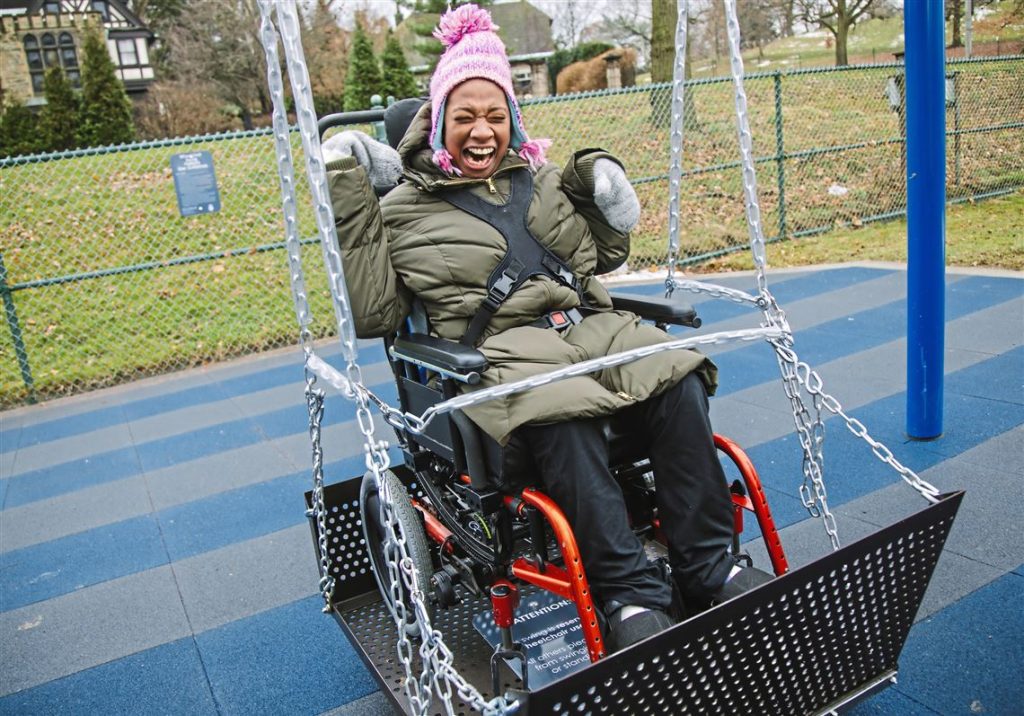
A fully inclusive playground is a thoughtfully designed recreational space that welcomes and supports children and adults of all abilities, including those with physical, sensory, cognitive, and developmental disabilities. It goes beyond ADA compliance to create an equitable, enriching, and social environment for everyone—kids, caregivers, and adults alike.
Key Features of a Fully Inclusive Playground:
1) Accessible Equipment:
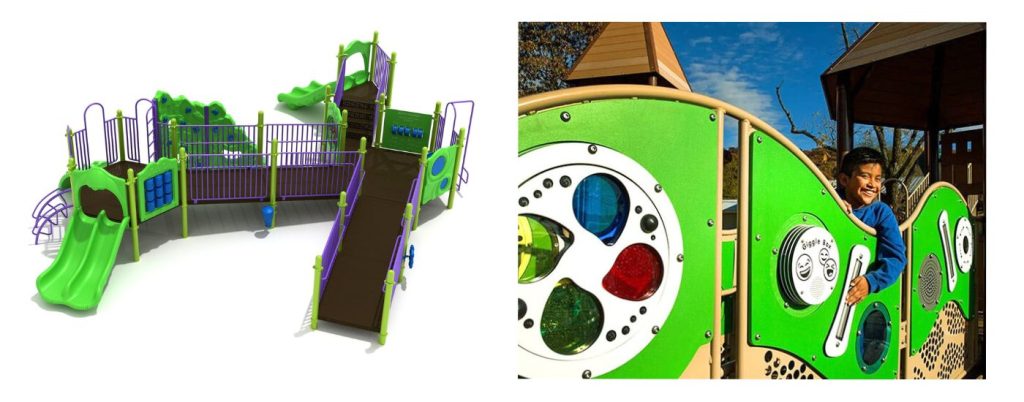
- Ramps to elevated play structures.
- Transfer platforms and adaptive swings.
- Ground-level play components for wheelchair users.
2) Sensory-Friendly Elements:
- Tactile panels, musical instruments, and quiet areas.
- Color contrasts and textures for the visually impaired.
3) Social Interaction Spaces:
- Inclusive seating and group play areas.
- Cozy zones for rest or one-on-one interaction.
4) Cognitive and Developmental Support:
- Games and structures that support learning through play.
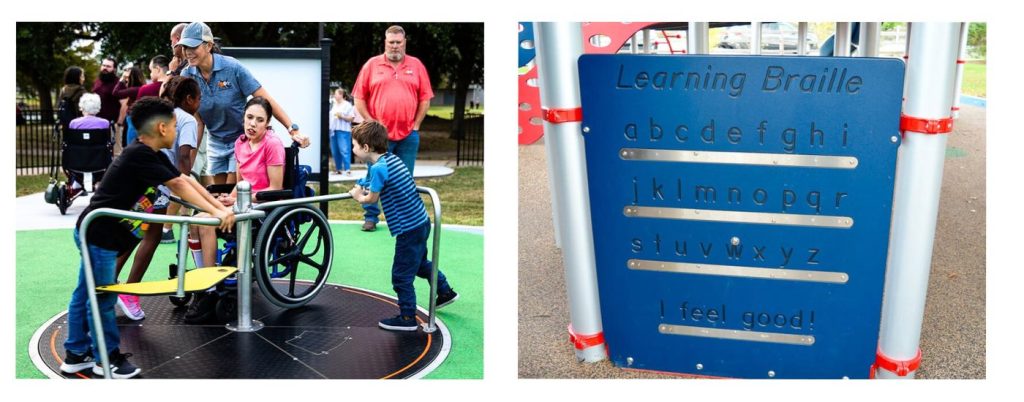
- Signage using visual symbols and braille.
5) Safe, Smooth Surfaces:
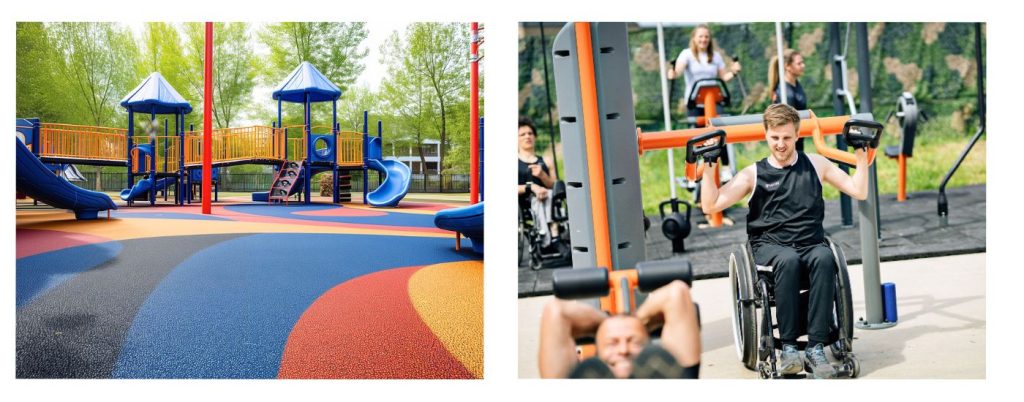
- Rubberized or turf surfacing for easy mobility.
6) Adult Inclusion:
- Sturdy, accessible benches and walking paths.
- Equipment designed for adult use (e.g., low-impact fitness stations).
Benefits of an Inclusive Playground
For People with Disabilities:
- Promotes Independence: Encourages self-directed play and movement.
- Fosters Belonging: Reduces social isolation and exclusion.
- Builds Skills: Enhances motor, sensory, and cognitive development.
- Boosts Confidence: Everyone can participate at their own level.
For Families and Communities:
- Encourages Intergenerational Play: Adults with disabilities or seniors can engage alongside children.
- Increases Social Awareness: Kids learn empathy, diversity, and inclusion early on.
- Strengthens Families: Caregivers with disabilities can actively participate in their children’s play.
- Accessible Recreation for All: Promotes community wellness and equity.
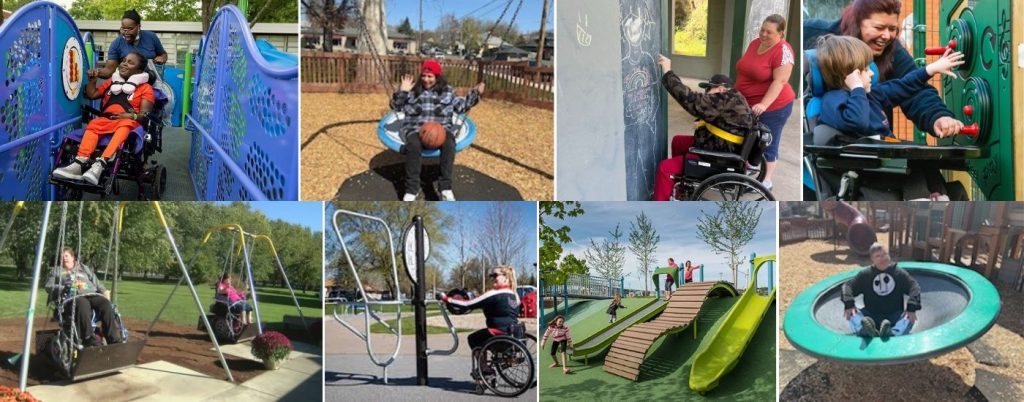
A fully inclusive playground isn’t just about access—it’s about belonging and joy for everyone. It’s a powerful expression of universal design in public spaces, proving that play is a right, not a privilege.