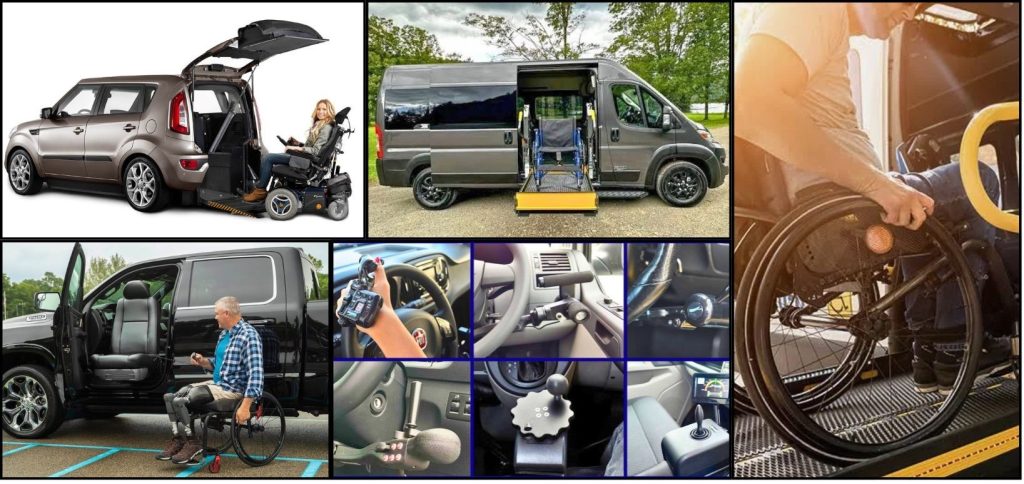
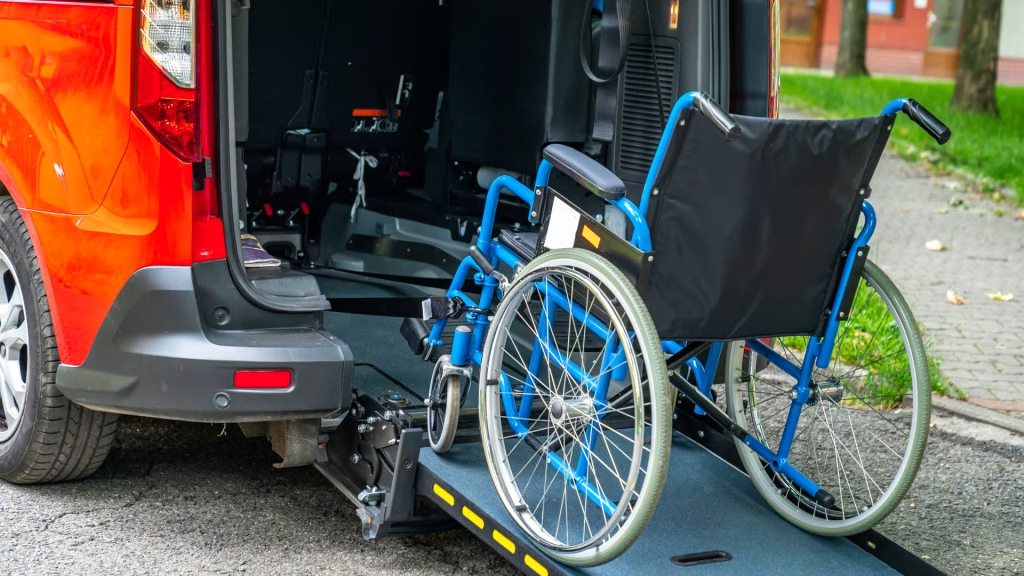
Finding the right vehicle when you live with a mobility challenge isn’t about chasing a “best of” list — it’s about matching a car to your body, your equipment, and your daily routine. Someone who transfers into a seat needs something very different from someone who drives from a wheelchair or needs a powered ramp for a passenger. Still, a few categories consistently rise to the top for accessibility, comfort, and ease of adaptation.
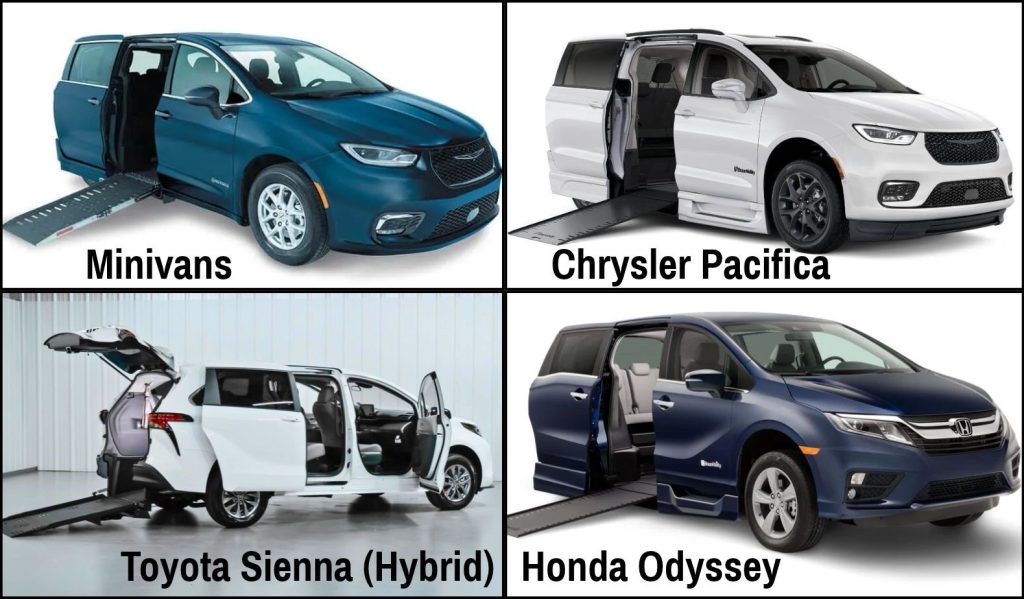
Wheelchair-Accessible Minivans
- Minivans remain the gold standard for wheelchair-accessible vehicles (WAVs) because their low, flat floors and wide door openings make ramp conversions straightforward.
- Chrysler Pacifica — Widely considered the benchmark WAV on the market, with well-established conversions from companies like BraunAbility and Driverge offering both side-entry and rear-entry ramp options.
- Toyota Sienna (Hybrid) — A popular choice for its reliability and hybrid fuel economy, available with power or manual ramp conversions.
- Honda Odyssey — Known for generous interior space and a smooth ride, making it a favorite for families who need extra room for mobility equipment.
Accessible SUVs
For drivers who want a higher ride height and a more rugged feel without sacrificing accessibility, converted SUVs are a growing segment.
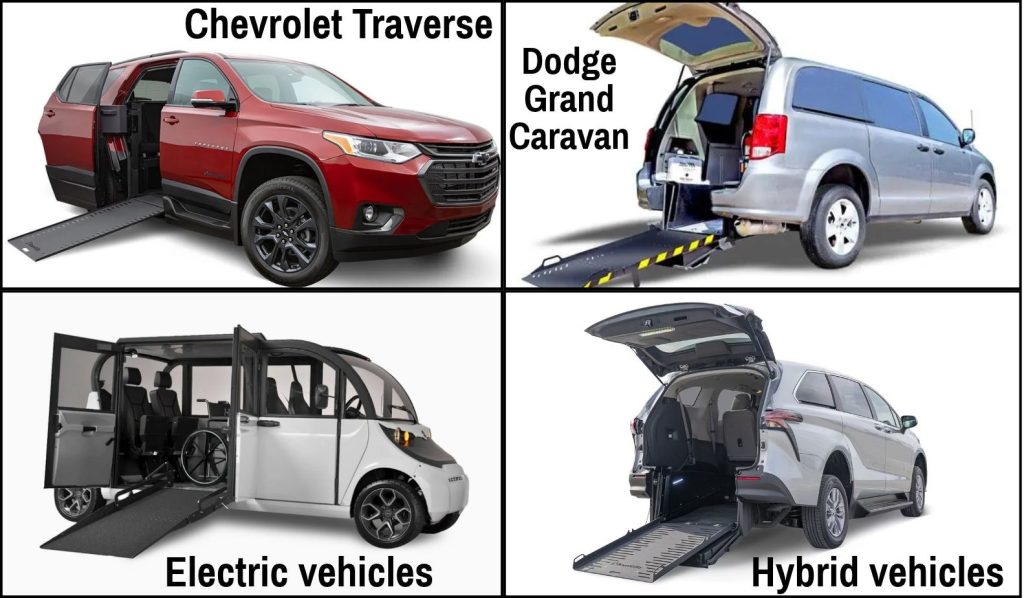
- Chevrolet Traverse — Recently introduced as a wheelchair-accessible SUV conversion, blending everyday SUV styling with a power in-floor ramp system.
Budget-Friendly Options
- Dodge Grand Caravan — Often cited as the most affordable entry point into the WAV market, ideal for those prioritizing cost over premium features.
Electric and Hybrid Considerations
Electric vehicles are becoming a realistic option too, though the ecosystem of EV-based wheelchair conversions is still maturing. Buyers considering an EV should weigh seating height, door design, and how easily adaptive equipment (hand controls, transfer boards, swivel seats) can be installed, since accessibility depends on far more than the powertrain. Home and public charging access should also factor into the decision, as not every charging station is easy to reach from a wheelchair or with limited mobility.
What to Look for Beyond the Model Name
Whichever car or van you’re considering, a few features matter more than the badge on the hood:
- Low, flat floors for easier ramp or lift installation
- Wide door openings to accommodate wheelchairs or walkers
- Adjustable, swivel, or power-transfer seats for those who transfer rather than roll in
- Hand control compatibility for drivers with limited leg mobility
- Adequate ramp angle and interior clearance so a wheelchair user has full headroom once inside
Buy New, Buy Used, or Consider Transport Services
New WAV conversions can range from roughly $60,000 to well over $100,000 depending on the vehicle and conversion type, which pushes many buyers toward the used market. “Used-new” vehicles (a used base vehicle with a new conversion) can offer solid savings without sacrificing safety. For those who only need occasional transport — medical appointments, for example — a non-emergency medical transport service may be more practical than vehicle ownership altogether.
The Bottom Line
There’s no single “best” car for mobility issues — the right choice depends on whether you’re driving or riding, transferring or staying in your wheelchair, and what kind of budget and lifestyle you’re working with. Minivans like the Chrysler Pacifica and Toyota Sienna remain the most trusted starting points, but SUVs and budget vans are closing the gap. Before buying, it’s worth consulting a certified mobility dealer or a driver-rehabilitation specialist to make sure whatever you choose truly fits your needs.