
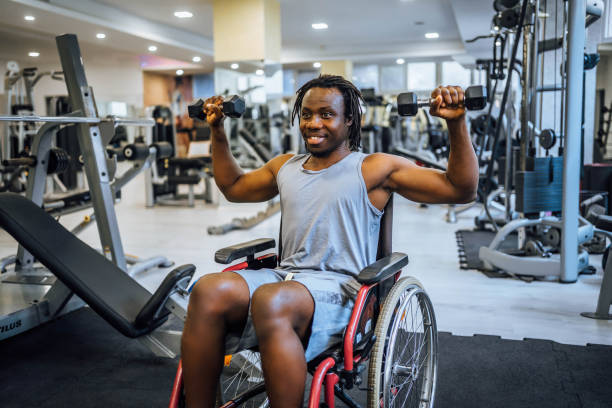
“Everyone should have access to a safe and inclusive fitness environment. But the reality is that many gyms are inaccessible to people with disabilities. Research from Lakeshore Foundation, a nonprofit promoting inclusion in fitness, found that 81% of individuals with a disability did not feel welcome in the fitness space, and nearly 75% of them don’t believe fitness facilities are accommodating. But the tide is turning, and more gym owners are realizing the benefits of designing an inclusive gym.” [1]
What is Accessibility and Inclusivity?
“The first thing to understand is the difference between the two terms, accessibility and inclusivity. In its simplest form, accessibility refers to whether or not a person can access something. When referring to a fitness center, accessibility ensures that people with disabilities have physical access to and are able to appropriately and safely use the facility and its amenities. On the other hand, inclusivity speaks to how “included” a person feels. Inclusivity, as it relates to your business and those with disabilities, refers to creating an environment that makes people feel welcome and comfortable. The two concepts are distinct but very connected to one another as you can see.” [2]
How To Make Accessible Gym?
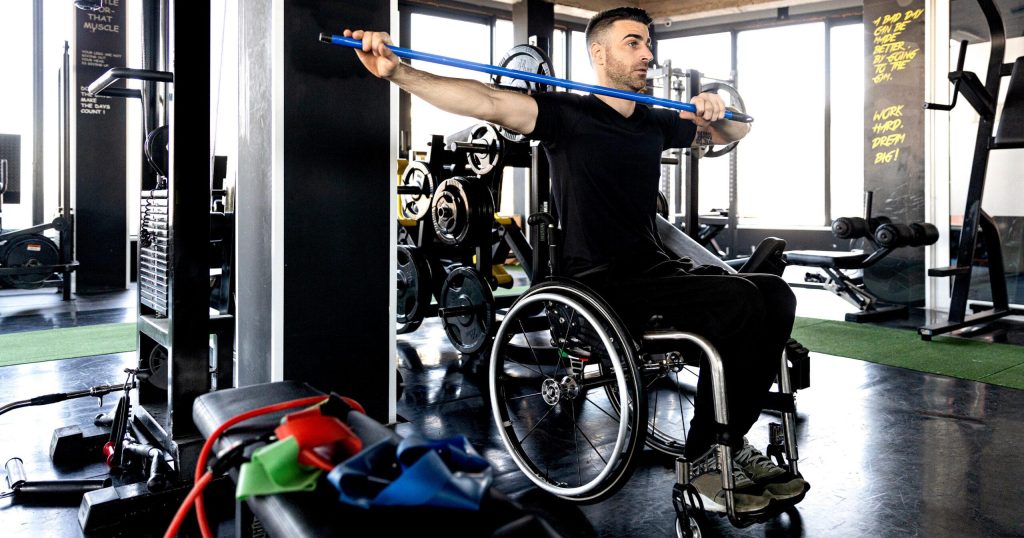
Creating an accessible gym means ensuring that people with disabilities or mobility limitations can use the space, equipment, and programs comfortably and safely. This includes people with physical, sensory, cognitive, and neurodiverse needs.
Here’s how to make a gym accessible:
1. Physical Accessibility
- Entrances and Pathways
- Wide, automatic doors (at least 36 inches wide).
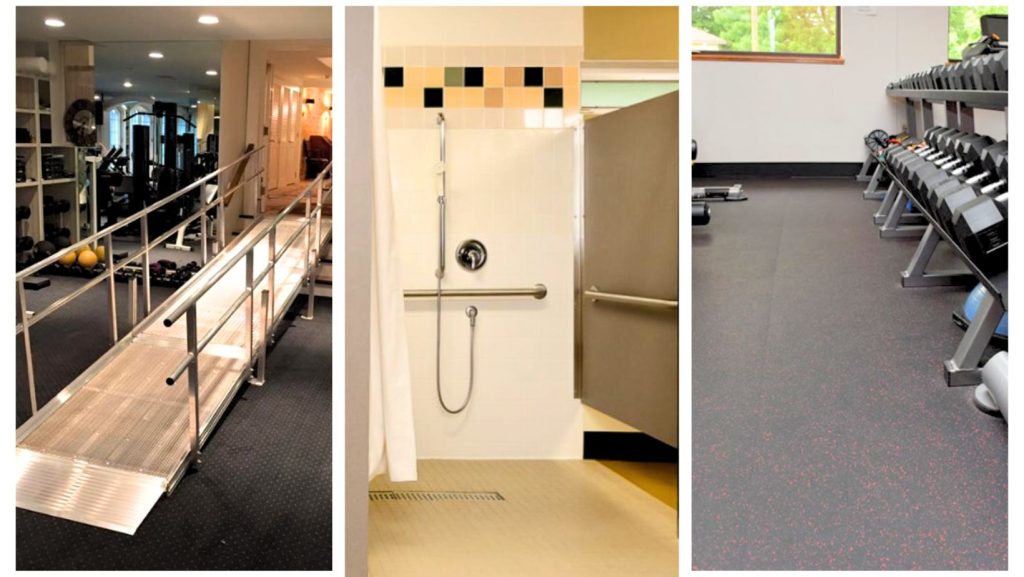
- Ramps with proper handrails and non-slip surfaces.
- Clear, unobstructed pathways between machines (minimum 36 inches wide).
Restrooms and Locker Rooms
- ADA-compliant bathrooms and changing areas.
- Accessible showers with grab bars and roll-in access.
- Lockers at accessible height.
Floors and Lighting
- Non-slip flooring.
- Even surfaces with no steps or unexpected changes.
- Bright, well-distributed lighting (for visual accessibility).
2. Accessible Equipment
- Resistance machines with adjustable seats or that can be used from a wheelchair.
- Cardio machines like treadmills or hand cycles with accessible controls.
- Open space for bodyweight and functional training.
- Grab bars and handles that are easy to grip.
- Color-coded or tactile-labeled weights and equipment for visual impairments.
3. Staff Training
- Train staff in disability etiquette, communication, and basic assistance.
- CPR and first aid training should include considerations for people with disabilities.
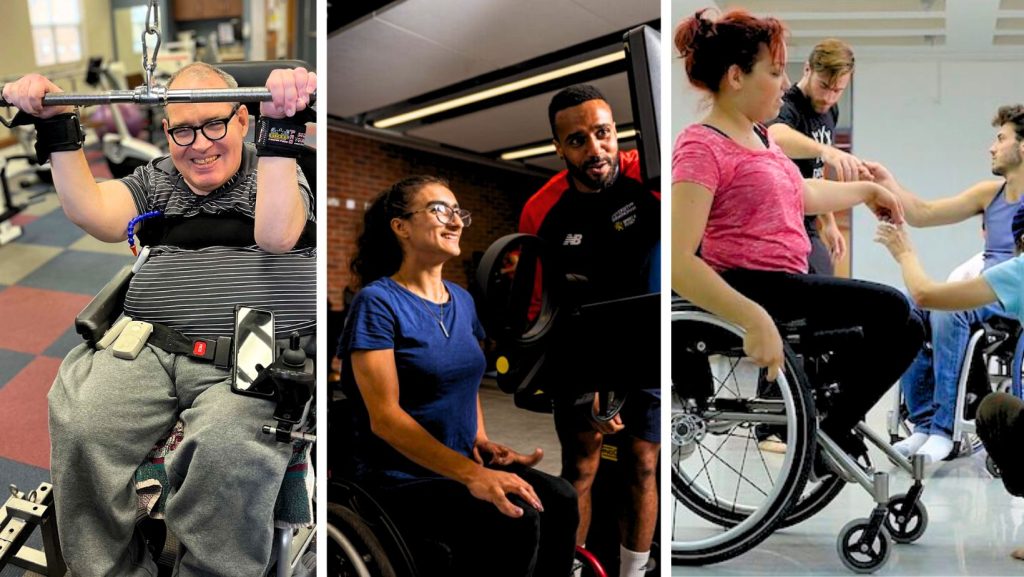
- Offer personal trainers who specialize in adaptive fitness.
4. Programming and Communication
- Adaptive fitness classes (e.g., seated yoga, low-impact cardio).
- Offer virtual classes for home accessibility.
- Provide schedules and instructions in multiple formats:
- Large print
- Braille
- Plain language
- Digital/online access with screen-reader compatibility
5. Technology & Support
- Hearing loops or captioning in group class areas or on-screen video workouts.
- Fitness apps or check-in kiosks should be screen-reader accessible.
- Emergency call buttons reachable from a seated position.
6. Inclusive Culture
- Promote inclusion and diversity in marketing materials.
- Encourage feedback from disabled members and make changes accordingly.
- Host awareness events or workshops on adaptive fitness.
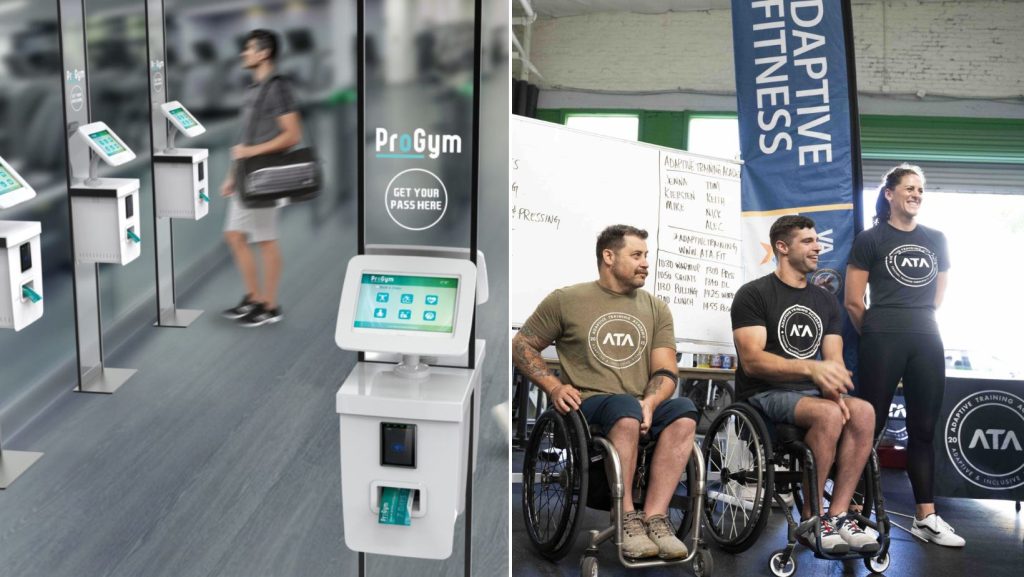
Checklist Summary
- ADA-compliant facility layout
- Adapted and inclusive equipment
- Trained, supportive staff
- Inclusive programs and materials
- Accessible digital tools
- Culture of inclusion and respect
Resources
[1] https://www.fitnessondemand247.com/news/inclusive-gym
[2] https://hurusa.com/accessibility-and-inclusivity-why-both-are-important-to-fitness-centers/
[3] https://chatgpt.com/c/6893d6c6-5ae8-832f-a637-054b71459e7d